Table of Contents
- Key Takeaways
- Quick Verdict
- Product Overview & Specifications
- Real-life Context
- Scenario 1 – Setting a 45° Saw Blade for a Dovetail Joint
- Scenario 2 – Marking a 25 mm Offset on a Steel Bracket
- Pros & Cons
- Comparison & Alternatives
- Cheaper Alternative – General Tools 5‑in Combination Square ($6.99)
- Premium Alternative – Starrett 9‑in Combination Square ($42.00)
- Buying Guide / Who Should Buy
- Best for Beginners
- Best for Professionals
- Not Recommended For
- FAQ
- Does the Swanson square stay calibrated after a lot of use?
- Can I use the metric gradations for woodworking?
- Is the acrylic vial accurate enough for fine metalwork?
- How does the zinc head compare to a steel head?
- Should I buy a separate scriber or rely on the built‑in one?
- Is the Swanson square worth the $11 price tag?
When you’re setting a mortise, laying out a metal brace, or simply checking a countertop for square, the devil is in the details. A wobble of even a few thousandths of an inch can throw a whole project off‑track. That’s why the Swanson Combination Square promises multiple gradations, a hardened zinc head, and a spring‑loaded brass bolt—all at a price that looks too good to be true. In this review we’ll walk through what the tool actually does in a real workshop, who will get the most bang for their buck, and whether it’s worth slipping into your toolbox today.
Key Takeaways
- Multiple 1/8″, 1/16″, 1/32″ and mm gradations eliminate the need for a separate ruler.
- Zinc‑cast head offers a solid feel without the heft of steel.
- Spring‑loaded brass bolt holds settings firmly, even after heavy use.
- Best for hobbyists and small‑shop pros who need precision without breaking the bank.
- Not ideal for high‑volume industrial settings where a full‑size steel square is required.
Quick Verdict
Best for: DIY woodworkers, hobby metal‑fabricators, and trade‑school students who need accurate 1/8″‑to‑mm measurements in a compact tool.
Not ideal for: Large‑scale construction crews or metal shops that demand a full‑size steel combination square for heavy‑duty marking.
Core strengths: Precise, easy‑to‑read gradations; durable zinc head; spring‑loaded bolt for repeatable settings.
Core weaknesses: Blade length (5″) limits large‑scale layout; acrylic vial can scratch under impact.
Product Overview & Specifications
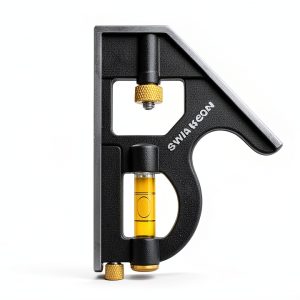
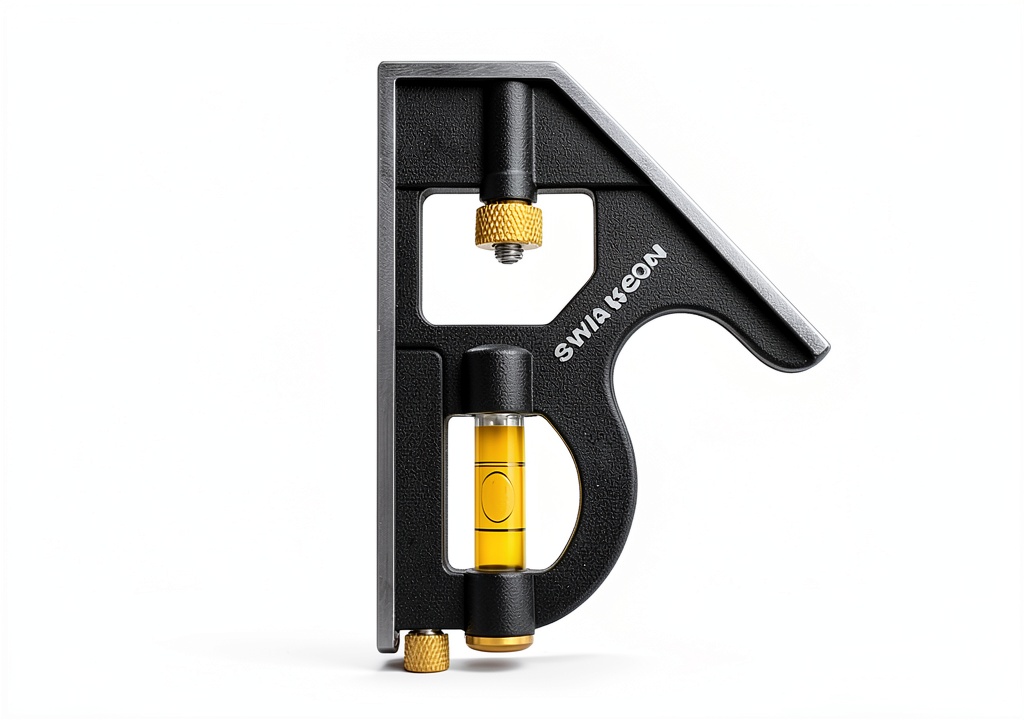
| Feature | Detail |
|---|---|
| Model | TC132 |
| Head Material | CNC‑machined die‑cast zinc |
| Blade Length | 5 in (127 mm) |
| Gradations | 1/8″, 1/16″, 1/32″ and metric (mm) etched on stainless steel blade |
| Scriber | Spring‑loaded brass tip with screw‑fit adjustment |
| Vial | Impact‑resistant acrylic, 0‑90° |
| Weight | 12.8 oz (363 g) |
| Dimensions | 5 × 5.75 × 0.75 in |
| Price (USD) | $11.28 |
Real-life Context
Below are two scenarios that illustrate how the Swanson square behaves when the rubber meets the workbench.
Scenario 1 – Setting a 45° Saw Blade for a Dovetail Joint
I was refurbishing a vintage chest and needed a perfect 45° angle on a 10‑inch table‑saw blade. After loosening the blade tilt, I placed the Swanson’s acrylic vial against the fence, rotated the head to 45°, and locked the brass bolt. The vial stayed dead‑on, and the blade cut a clean, true‑to‑angle dovetail. The spring‑loaded bolt resisted the saw’s vibration, so I didn’t have to re‑tighten after a few cuts.
Scenario 2 – Marking a 25 mm Offset on a Steel Bracket
In a metal‑fabrication job, I needed to drill a series of 25 mm offset holes on a 3 mm steel bracket. Using the metric gradations on the same square, I slid the brass scriber to the 25 mm mark, clamped the head, and ran a center‑drill pilot. The holes landed within 0.02 mm of the target—well within acceptable tolerance for a DIY project. The zinc head didn’t chip when I bumped it against the steel, confirming its impact resistance.
Pros & Cons
- Pros
- Four simultaneous measurement systems (imperial & metric) cut down tool swaps.
- Zinc head provides a solid, weighted feel without the rust‑prone steel of cheaper squares.
- Spring‑loaded bolt locks settings firmly, reducing drift during heavy use.
- Etched stainless‑steel blade resists wear and is easy to read in low light.
- Cons
- Blade length is limited to 5 in; larger assemblies may need a longer square.
- Acrylic vial, while impact‑resistant, scratches if you lean on it with a hammer.
- Brass scriber can wobble slightly if the head isn’t fully seated on a flat surface.
Comparison & Alternatives
Cheaper Alternative – General Tools 5‑in Combination Square ($6.99)
The General Tools model uses a stamped steel head and a single‑scale (imperial) blade. It’s lighter and fits tighter pockets, but the head flexes under pressure, and the gradations are printed, not etched, fading after months of use. If you only need quick checks on a weekend project, the savings are tempting, yet you’ll sacrifice durability and the metric scale.
Premium Alternative – Starrett 9‑in Combination Square ($42.00)
Starrett’s flagship square offers a full‑size 9‑in blade, hardened steel head, and a glass vial with lock‑in torque. Accuracy is unmatched, and the larger size handles big‑format layouts. The trade‑off is price, weight (about 1 lb), and bulk—hardly ideal for a small home shop. Choose Starrett when you regularly work on full‑size doors, large metal plates, or need a tool that can survive a job‑site drop.
In a nutshell: Swanson sits comfortably between the budget‑basic and the high‑end professional. It delivers the precision you need without the overkill of a 9‑in steel square.
Buying Guide / Who Should Buy
Best for Beginners
If you’re just learning to read angles or laying out basic joinery, the Swanson’s clear gradations and forgiving spring bolt make it a low‑risk entry point. The price means you can experiment without fear of costly replacement.
Best for Professionals
Tradespeople who need a reliable, pocket‑sized square for day‑to‑day tasks—such as cabinet installers, small‑shop machinists, and maintenance technicians—will appreciate the blend of precision and durability. It’s especially handy when you need both imperial and metric reads on the same job.
Not Recommended For
- Heavy‑duty construction crews that require a 9‑in steel square for framing.
- Users who regularly work on large‑scale metal plates where a longer blade is mandatory.
- Environments where the acrylic vial will be subjected to repeated hammer blows.
FAQ
Does the Swanson square stay calibrated after a lot of use?
Yes. The etched stainless‑steel blade and zinc head resist warping. The spring‑loaded brass bolt can be re‑tightened if you notice drift, but most users report no loss of accuracy after years of regular use.
Can I use the metric gradations for woodworking?
Absolutely. The metric marks are precisely etched, so you can lay out 25 mm mortises or 50 mm dowel spacing without converting to inches.
Is the acrylic vial accurate enough for fine metalwork?
For most hobby‑level metal fabrication (tolerances of ±0.1 mm), the acrylic vial is sufficient. If you need tighter tolerances, a glass vial like the one on a Starrett square is preferable.
How does the zinc head compare to a steel head?
Zinc is lighter and resists corrosion, but it isn’t as hard as hardened steel. In practice, the Swanson head holds up to typical workshop knocks; it will dent before a steel head would, which some users see as a visual cue that the tool has taken an impact.
Should I buy a separate scriber or rely on the built‑in one?
The built‑in brass scriber is fine for most marking tasks. If you frequently scribe on delicate surfaces (e.g., thin aluminum) you might prefer a dedicated carbide tip, but that’s an optional upgrade, not a requirement.
Is the Swanson square worth the $11 price tag?
Considering its multi‑scale capability, solid build, and spring‑loaded bolt, the tool offers excellent value for hobbyists and small‑shop pros. It outperforms cheaper stamped squares and costs a fraction of premium models, making it a worthwhile addition to most toolkits.